
I used to ask my clients where they see themselves in five to ten years. I stopped.

Not because the question is wrong, exactly. But because the answers almost never helped. People would produce something that sounded like a résumé from the future, or they’d freeze up entirely, unsure how to predict a life that keeps surprising them. And honestly? I found the same thing in my own life. A ten-year plan gives you a destination. It doesn’t give you a way of living.

What I’ve found more useful, both in my coaching practice and personally, is an exercise that has been around for years and works as well now as it ever did. I replaced “Where do you see yourself in five to ten years?” with a different question entirely:

Tell me about your perfect day.

One day. Not a career trajectory. Not a milestone. Just: what does a single day look like when it’s exactly the way you want it?

Why one day is more powerful than you think

Most people hear “perfect day” and assume it’s a lightweight exercise. A nice daydream. Something softer than real planning.

It isn’t.

When you visualize a day in rich, sensory detail, something happens in your brain that doesn’t happen when you set a five-year goal. Your brain is, at its core, a prediction machine. This is one of the central insights from neuroscientist Lisa Feldman Barrett’s research: the brain doesn’t passively wait for the world to happen and then react. It is constantly constructing predictions about what will happen next, based on everything it has learned before. Those predictions shape what you notice, how you feel, and what actions seem available to you.

This means that when you imagine your perfect day with enough specificity, you aren’t just fantasizing. You are training your brain’s predictive model. You are giving it new data about what a good life looks and feels like, so it can start filtering the world differently. Your brain doesn’t cleanly separate “real” from “vividly imagined.” The neural patterns overlap. A detailed visualization literally begins to reshape the predictions your brain makes about your own future.

This is why a five-year plan often fails to motivate: it’s too abstract to activate that predictive machinery. “Become a VP” or “Launch my own practice” doesn’t give your brain enough sensory information to work with. But “I wake up at 6:30, the house is quiet, I make coffee and sit on the porch for twenty minutes before I open my laptop” does. Your brain can simulate that. It can begin to orient toward it.

How the exercise works

You write about one perfect day. Not an exceptional day, not a vacation day, but a day in your regular life as you want it to be. You stay in the present tense. You include details: what you see, what you hear, how your body feels, who is around you, what kind of work you’re doing.

You don’t worry about “how.” You don’t try to be realistic. You focus entirely on the what.

The results often surprise people. One of my clients, a senior executive who came to coaching to “figure out her next move,” discovered through this exercise that her perfect day didn’t involve a title change at all. What she wanted was a morning where she wasn’t already in reactive mode before she finished breakfast. She wanted one meeting-free afternoon a week to think. She wanted to pick up her kids without checking her phone in the parking lot. None of this required a career overhaul. But she hadn’t been able to see it until she stopped thinking in terms of milestones and started thinking in terms of hours.

Another client noticed that her working days and her weekends represented completely different visions. She needed two versions of a perfect day, because what restored her on Saturday had nothing to do with what energized her on Monday. So we separated them. Both versions mattered.

And then there was the client who was in the middle of this exercise when she walked past a chair in a shop and had an immediate, physical recognition: this chair belongs in my perfect day. I asked her if she had a picture of it. She did. We saved it. That image became an anchor, something concrete that made the visualization feel less like an idea and more like something already beginning to exist.

That physical recognition is worth paying attention to. Barrett’s research on interoception, the brain’s capacity to read signals from the body, suggests that these gut-level responses carry real information. When your body says “yes” to a chair, or a neighborhood, or the image of yourself working in a certain way, that’s your predictive system telling you something about what it’s already learned to want. The exercise makes those signals louder.

What your perfect day reveals about you

Sometimes what shows up in a client’s perfect day tells me something they haven’t said out loud yet.

When someone describes a day that’s entirely about rest, beaches, palm trees, nowhere to be, nothing required of them, I pay attention. Not because there’s anything wrong with wanting that. But because, in my experience, when an entire perfect day is built around escape, it often means the person is at the edge of burnout or already past it. What they’re describing isn’t a life they want to build. It’s the recovery they desperately need right now.

So I’ll ask: how long would you actually want to stay on that beach? A week? A month? What happens after that? And usually, the conversation opens up. The beach was the exhale. Underneath it, there’s a different day waiting, one connected to what they actually care about and want to contribute. The real exercise begins when we connect the images and desires that surface to their values, to what drives them, to their why. That’s where the perfect day stops being a pleasant fantasy and becomes a compass.

Why reading it regularly matters

Writing the perfect day is just the beginning. The real work is returning to what you’ve written, regularly. Not to admire it, but to keep feeding your brain’s prediction system with specific, sensory-rich information about the life you’re building toward.

Here is what I have noticed with clients who do this consistently: they start making small decisions differently. Not dramatic changes. Small ones. They decline a meeting they would have accepted. They rearrange a morning routine. They say no to something that looks good on paper but doesn’t match what they actually want their days to contain. The perfect day becomes a filter, a way of evaluating choices that’s more honest than any strategic framework.

And because it describes a single day rather than a distant goal, it stays flexible. Life changes. What you want from a Tuesday in March might be different from what you wanted in September. You can revise your perfect day whenever it needs revising. It grows with you. A five-year plan feels like a commitment you might fail to keep. A perfect day feels like an invitation you keep extending to yourself.

Start with what you already have

Here is something most people don’t expect: when they write their perfect day, they discover that parts of it already exist. Maybe you already have the morning coffee ritual, or the walk, or the relationship, or the kind of work. You just hadn’t noticed, because you were focused on what’s missing rather than what’s present.

That recognition matters. It changes the exercise from aspiration into honest inventory. What do you already have? What’s close? What would need to change?

You don’t have to wait five years. You don’t have to overhaul anything. You might just need to notice what’s already there and protect it, and then, slowly, add the rest.

The day I realized I was living mine

I want to tell you something that happened to me.

A few years ago, I started working with my visibility coach, Eve Voyevoda. One of the first things she asked me to do was imagine my desirable state five years out and then reverse-engineer the path back to today. It was a different exercise from the Perfect Day, more structured, and honestly, at times quite painful. Reverse engineering a five-year vision forces you to confront every gap between where you are and where you want to be. I did it. I wrote it all down, including the sensory details of that future life and, alongside them, the business metrics and revenue targets I believed I needed to get there.

About a year and a half later, a client who had just completed her own Perfect Day reflection came to our session and said, “I live my perfect day.”

And then there was silence.

I managed to say, “Tell me more.” She described the state she was in, one she recognized as what she had written about. The life she had imagined had become the life she was actually living.

Later that day, I opened my own notes from the exercise I’d done with Eve. I reread the sensory descriptions I’d written, the morning, the work, the feeling of the day. And I realized, with genuine surprise, that I was living my perfect day too.

I ran to my husband to show him my old reflections, to point at the pages and say, look, this is my life now. He read them with his habitual groundedness and asked, “What about all these numbers and business goals?”

He was right that they were there. At the time I wrote those reflections, I was certain I needed specific revenue figures and business milestones to arrive at my best life. Life proved that it wasn’t true. What I needed was clarity about my purpose and serving it, day in and day out. The numbers I’d written down hadn’t materialized the way I’d planned. The life had.

That’s what this exercise can do. Not magically deliver a future. But clarify what actually matters, so that when you arrive at it, you recognize it.

If you’re curious about how the Perfect Day exercise changed the direction of my own career, I wrote about that here.


Try your own Perfect Day exercise. I’ve created a guide with questions and prompts to walk you through the process. You can download it here and take thirty minutes to write the day you actually want to live. Then come back to it in three or four months and see what’s changed, both on the page and in your life.

What surprises you? What’s already there that you hadn’t noticed?


If you’d like to stay connected, subscribe to our newsletter for reflections on coaching, leadership, and the kind of thinking that helps you lead with more clarity. You can also join our WhatsApp community channel to hear about upcoming community events.

I am an optimist.

Is this a bad thing?

Well, I hear a conversation happening in many circles right now.

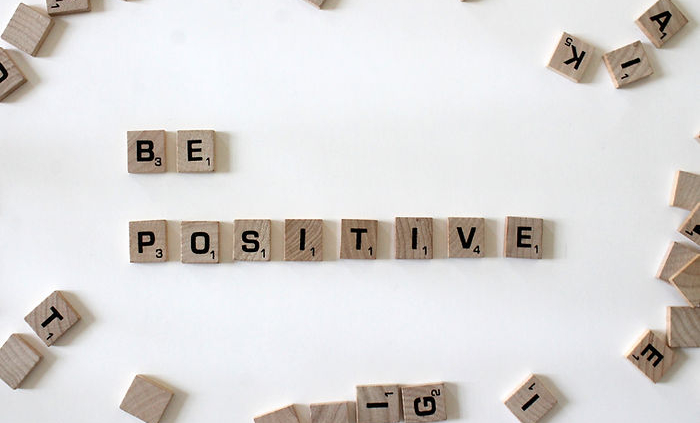
Just think positively. Or… Feeling down? Engage in uplifting self-talk. Or… Everything happens for a reason. Or… Choose to be happy.

None of these sentiments, on their surface, are bad things, but I do want to caution you about being overly-optimistic.

But, have you ever even heard of being “overly-optimistic” or “too positive” or “too resilient”? Is this even a thing?

Let’s dissect this concept a bit.

What’s Happening Behind Toxic Positivity

There are many people out there who engage in a consistently positive attitude, no matter the reality. They believe complete positivity is the answer to achievement and to avoiding failure, to attracting the “right” relationships and to moving through life unhurt and without fear. They believe that since we can make a choice to be happy and just be happy, that we should.

Don’t get me wrong. I love joy! However, when positivity, optimism and resilience are solely manufactured, I believe it is time to step back and take stock.

But, Maria [you may be thinking to yourself]… if I’m not working at being optimistic all of the time, then I am bound to feel… well… a whole range of other emotions. Like…even negative emotions! I might feel sad or bad or unhappy or jealous or angry or frightened or disillusioned or concerned or melancholy or…

Yes, I get the idea. And yes, this is true.

But to live in a state of forced positivity and to white-knuckle ourselves to happiness is counter-productive to our growth, our truth and our peace.

To force positivity is to deny reality. And this creates a distance between those who try to do this and their friends, family, colleagues, and acquaintances, because individuals who force this positivity will appear to be out of touch with an entire range of emotions. They often lack an understanding of how people can be upset or hurt. They can lose their compassion and their empathy.

In my practice, when I engage people experiencing negative emotions, I let them know this is okay. After all, this is what really makes us different from any kind of species: we have our emotions. I do not suggest my clients reframe negative emotions or talk themselves out of them. That would only serve to deny their experience.

Negative emotions are something we need to understand and acknowledge. To explore. And even sometimes to savor.

We can sit with not only the what of the emotion, but the why of the emotion.

Negative Emotions

We’ve traditionally viewed negative emotions as indicators that something isn’t functioning as it should. Sometimes, we may even feel ashamed for experiencing them. In practice, I’ve observed that male clients are surprisingly more willing to explore their negative emotions, whereas female leaders tend to deny them by ignoring or suppressing. The reasons for these observed differences could be the subject of another blog post. For now, I want to emphasize that negative emotions are invaluable; they prompt us to analyze and reflect.

Let me reiterate for everyone: Emotions have often been viewed as indicators or built-in reactions. However, they are not your permanent state. And here’s a fascinating twist: our nervous system doesn’t categorize emotions into ‘bad’ and ‘good.’ This insight invites us to reevaluate our emotions repeatedly.

But what if we shift our perspective, following the insights of Lisa Feldman Barrett, and see our emotions not just as indicators but as predictions? This understanding transforms our approach. Emotions then become our brain’s predictions based on past experiences, suggesting how we might react to similar situations in the future.

So, let’s take these negative emotions we experience. Instead of ignoring them, let’s understand them as predictions and use them to our advantage. Initially, let’s acknowledge them without attempting to dissect each one. Then, let’s examine these emotions under a new light: What do I predict? How can this foresight serve me? What does it teach me about my anticipated reactions? What insights do I gain about myself that were previously obscured?

To move beyond these predictions and not let them define our reactions, we can engage in activities such as breath exercises, meditation, or physical activities. These practices help us to reframe and rewire our brain’s predictive models. We’ll be optimists, but of a different kind—thoughtful and conscious.

Remember, reevaluating our emotions as predictions isn’t a quick fix. While we might outsmart our brain temporarily, our body’s wisdom isn’t easily bypassed.

This approach is a choice. A powerful choice. You decide how to interpret and use these predictive emotions. You can release them, or you can explore and play with these anticipatory feelings—mindful, though, not to let them deplete your energy.

For a deeper understanding of emotions as predictions, I highly recommend checking out Lisa Feldman Barrett’s insightful explanations on this topic.

Time to Reflect

The next time you feel a negative emotion surfacing, see what it feels like not to stuff it down, not to reframe it immediately, not to suppress it, or push it aside in the name of (toxic) positivity.

Explore what it feels like to acknowledge it. To examine it. To peel it back a bit and uncover something valuable from it. To thank it for providing some insight for you.

And then, to start planting the seeds for new, better predictions. You’re the only person who can make changes in your life.

Believing in you,

Maria

I want to share a recent experience with you that stopped me in my tracks.

Initially, it was something that brought me a lot of pride, but quickly, that pride turned into concern. Should I feel pride for getting something done even if it means running myself into the ground?

My answer: An unequivocal no.

Here’s what happened.

I needed a video completed.

So, I decided to do this all myself. And when I say I did everything myself, I mean, I did everything myself. I wrote the script. I set up my camera and my sound. The quality was not that great, but who cares? Perfection is the enemy of the good (and complete). I edited the video once it was done. I created a thumbnail for this video. And I did not stop there. I found free music I was permitted to use for the video and put it all together. To finish off, I added subtitles.

Finally, after many steps and stumbling blocks, I posted the video.

At first, I was very proud (and I do still think it’s pretty cool I figured out how to do that stuff).

But, if I look closely, I can find something wrong at every stage of this. I do not wish to go into film production. I do not want to become a studio producer. I needed to put off other things in order to complete this. So where did I falter?

Examining this scenario, I realized the one (big) thing missing: I did not properly delegate.

If you have a lot on your plate, it is probably time to invite someone and share your dish.

Life, work…everything can feel overwhelming sometimes. You have a never-ending to-do list, and there aren’t enough hours in the day for all you need to get done. You feel drained.

Here’s the truth: You can do many things yourself. You have many talents. And, maybe you want to work things out on your own for a variety of reasons. Perhaps it is important for you to save some money. Maybe you’d like to explore new skills because you’re curious. These are all valid reasons to take things on yourself, especially in the short-term with quick turnarounds.

But, when it comes to the longer-term, I take a different view.

When you engage in many tasks, you are spreading your energy and your precious focus and attention on something outside of the scope of your big goal… outside of the scope of your WHY.

I understand, for many of us that feel the need for control over all aspects of our lives/work/business/environment, we may be worried something will go wrong or something will be ruined if we let someone else get their hands in the pot.

But, if we can begin to surrender some of this control, we will begin to realize that there is very little we need to truly manage ourselves in the long-run. Freeing our time a bit allows us to engage in activities that are really meaningful and drive purpose for us.

And, yes. Asking for help can feel scary.

It can seem like you are begging or that you are promoting your inability to do something.

Do not be afraid to ask for help.

Asking for help shows you are strong enough and brave enough to ask. If you are in a leadership role, this is even more powerful. I promise, it will demonstrate your strength.

Check your thinking preferences (ask me about the NBI profile to determine your preferences). If it’s a one time task you can focus on and be done with it: do it. You can do anything.

But, evaluate your longer-term projects and decide what to keep for yourself, and what to delegate.

What might it look like to take the longer view?

● In a corporate environment: You can reconsider your job description or your team members’ job descriptions. If you have the flexibility to allocate the workload differently, bring up the topic to discuss. Invest time in figuring out what people like to do and enable them to do their favorite work. If you have less control, engage with your partners; take advantage of the resources around you. When in doubt, ask. You never know what might be possible.

● If you own your own business: The answer isn’t always jumping to hire a costly professional, though it may feel tempting. You may be able to teach someone how to do what you need. It can be a win-win, as they may be excited for an opportunity to learn the ropes with you. Hiring or partnering with other entrepreneurs can be mutually beneficial. Explore barter options. Get creative!

● In your personal life: Do not be afraid to ask family members and friends to help you. Remember, this is not a sign of weakness, but of strength, and you will be modeling for all of those in your life what strength can look like. This can unite you even more with your loved ones.

My final word: No matter how independent, self-starting (or stubborn!) someone is, I always advise to hire a professional, when reasonable, in these two situations as a non-negotiable: taxes and health & safety.

Take (Small) Action Now

How can you find out what you want to keep on your plate and what you wish to delegate or share with others? Complete the exercise I call “My Perfect, Beautiful Day.” Close your eyes and imagine your best day… what are you doing, what are you NOT doing, and how do you feel?

Now, what’s one thing currently on your plate that didn’t show up in your Perfect, Beautiful Day, and who can you ask for help to get it done?

Enjoyed this post? You may want to explore my series on time management. The latest post is here.

Photo by Austin Distel on Unsplash

Breathe! It’s safe to breathe.

We generally take our breath for granted. Breathing is automatic. You don’t need to remember to breathe when you go about your day or when you sleep. The respiratory center at the base of our brain controls our breathing subconsciously.

That said, you can take control of your breathing if you want. For example, you can hold your breath staying under water or train it for speeches or singing. 

But, have you ever noticed how often you hold your breath subconsciously?

In his Psychology Today article, “Waiting to Exhale,” Alan Fogel, PhD. provides us with some insight. “Usually, breath holding occurs under stress or threat. It can also occur when we are anticipating something or wanting something to happen: this is the origin of the phrase, “Don’t hold your breath!” when expected things may not come true.”

When given the choice, most of us would say that we yearn to stay in a state of “relaxed breathing,” however, we likely don’t even not even realize when we switch over to what is called “effortful breathing.” Fogel goes on: “effortful breathing…[is] not healthy because the muscular effort, coupled with the effects of stress on the nervous, hormonal, and immune systems, can impair both physical and psychological function.”

Not all breathing is created equal.

In addition to effortful breathing, I’m going to share another type of breathing with you. Have you ever heard of the term “screen apnea”? Screen apnea is a breath hold or engaging in shallow breathing while you’re looking at the screen. Looking at a screen…this something many of us do for hours a day without even thinking about it!

As shared in this Business Insider article, studies have shown that we can go into a state of “shallow breathing, breath-holding and hyperventilating” when we are in front of our screens. This action triggers “the sympathetic nervous system toward a fight-or-flight state” and our bodies are physically getting ready to take serious action. “Our bodies are tuned to be impulsive and compulsive… we also become tuned to over-consume.”

Said another way: Have you ever been scrolling through Instagram only to look down and notice an entire box of cookies is gone. Who came in and stole these without my realizing it? you may ask yourself, as you wipe the crumbs from your shirt. This is all a result of screen apnea. “In this state… we reach for every available resource, from food to information, as if it’s our last opportunity— pulling out our smartphones again and again to check for e-mail, texts and messages.”

How can we approach breathing with intention? The answer is simple: breathwork.

We now know a bit about what kind of breathing we want to stay away from, but is there a way to remedy this?

The answer is yes. We can move away from effortful breathing and into intentional or controlled breathing. This is breathing that actually helps and supports our bodies and our minds.

As the reading on screen apnea notes, “Deep and regular breathing, also referred to as diaphragmatic breathing, helps to quiet the sympathetic nervous system.” The next time you pick up your phone to check email or send a text, see if you can get in tune with your body. Notice how you feel physically. Approach your breath with intention. But, this isn’t just about being mindful of our time on our screens. This is about intentional breathing in all situations.

While various breathing practices have been known for centuries, studies are merely beginning to reveal the benefits of controlled breath, also known as breathwork. It has been found that breathing practices can help reduce stress, burnout, anxiety, hormonal imbalances, sleep issues, depression, and other disorders. It can improve circulation and blood pressure and even increase anti-inflammatory activity.

Who can benefit from breathwork?

You may think that breathwork is for individuals who are intensely struggling or suffering. You are right; breathwork is very supportive for stress, tension, overwhelm, fear, anxiety, burnout, and more. But breathwork is also beneficial for people who are stepping up to the next level in self-compassion, gratitude, clarity, consciousness, and connection.

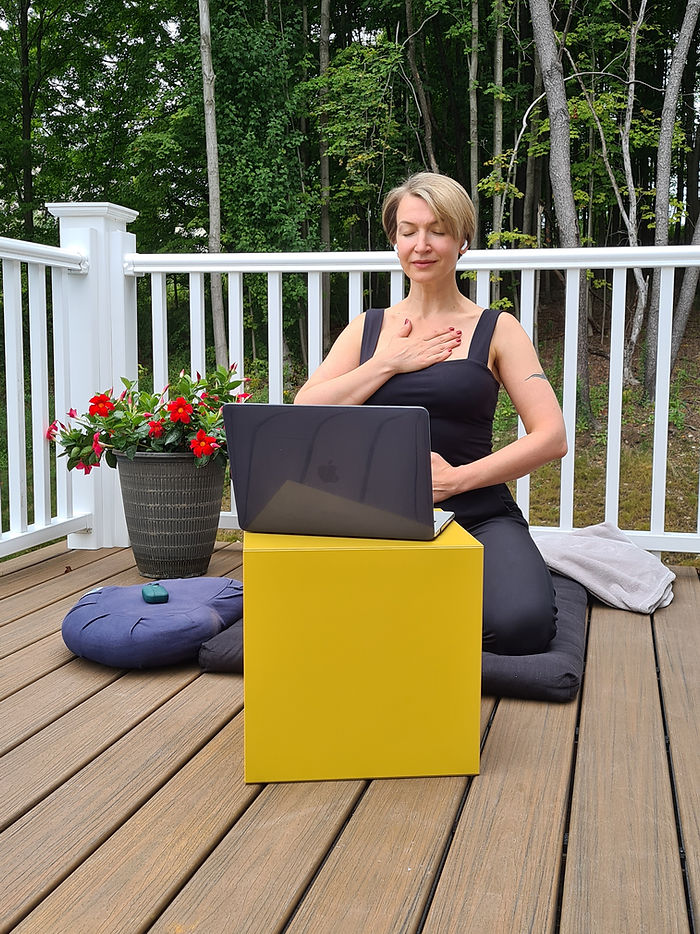
I was personally introduced to breathwork one year ago and fell in love immediately. Breathwork became a life-changing experience for me. Now, I run free-of-charge breath clubs in two languages – English and Russian – offering one-on-one sessions, sessions for small groups, and intensive programs. As a result, we’re building strong conscious and connected communities of people who are transforming themselves and their lives.

Curious to try?

Join me at my Breath Club “Conscious and Connected” each month for breath sessions. These sessions are free and open for all whether this is your 1st or 50th breathwork session. We start with a meditation and continue with a conscious, connected breath technique.

New to breathwork? Don’t be intimidated with the novelty of this experience. I will stay with you at every step of your practice.

When you need additional support, close your eyes and imagine yourself in the center of the circle with us holding each other’s hands and sending you our love and support.

Do you feel stronger now?

P.S. I’m adding this update on July 27th, 2022. I’m not facilitating breath sessions now, but I breathe each Sunday with Alchemy of Breath – they offer free sessions to anyone who is interested. Check their sessions here.